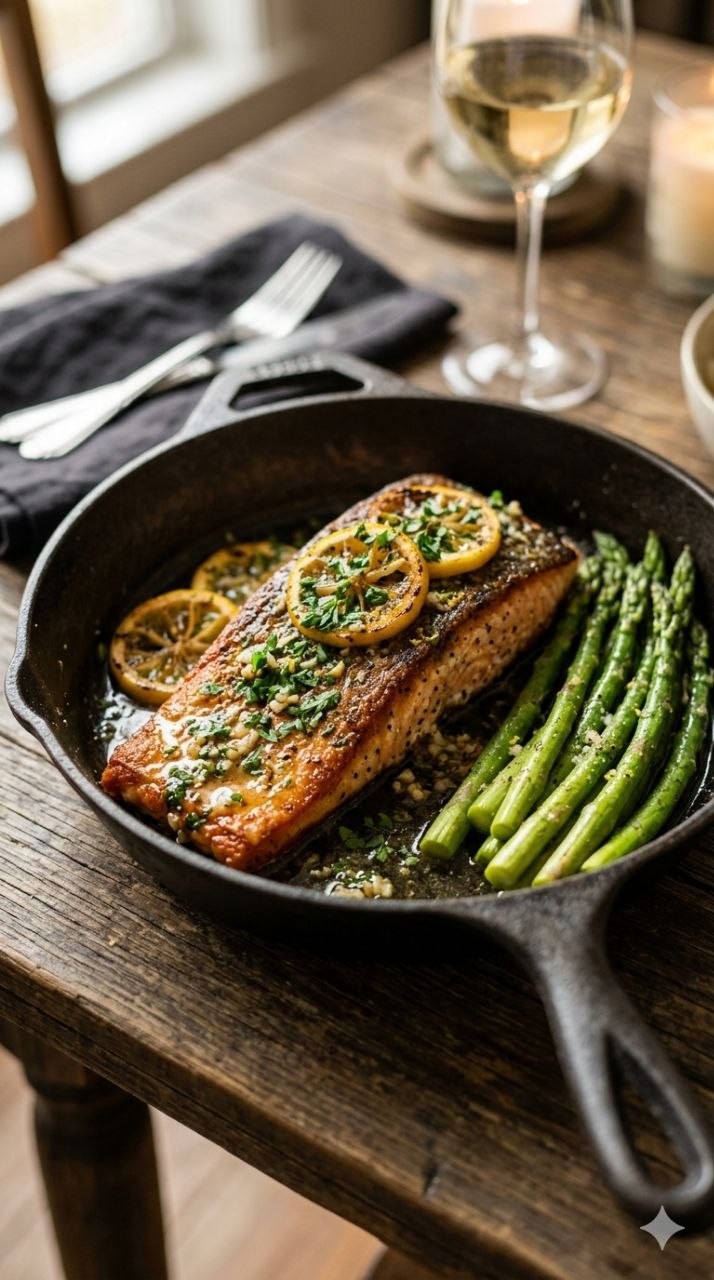
Skillet Seared Salmon with Garlic Lemon Butter Sauce: 7 Effortless Fixes for Dry, Bland, Overcooked Disasters
RECIPE CARD
Recipe Name: Skillet Seared Salmon with Garlic Lemon Butter Sauce
Prep Time: 10 minutes | Cook Time: 12 minutes | Total Time: 22 minutes
Servings: 2–4 (depending on fillet size)
Difficulty: Easy
Estimated Calories per Serving: 420 kcal
Equipment Needed:
- Heavy skillet (preferably nonstick or cast iron)
- Fish spatula or regular spatula
- Small bowl
- Whisk or fork
- Tongs (optional)
WHY THIS RECIPE WORKS FOR REAL LIFE
This is a practical, weeknight-friendly recipe that gives you flavorful salmon in under 25 minutes. The garlic lemon butter sauce doubles as a quick pan sauce, cutting down on cleanup.
I often make this when I want a one-pan meal that feels “special” without extra effort. Leftovers reheat well in a skillet or oven without losing texture.
It’s best for:
- Busy weeknight dinners
- Small households or couples
- Meal prep for a few days if you scale portions
INGREDIENTS (WITH CONTEXT)
- Salmon fillets, 4–6 oz each (skin-on preferred) – Important
- Skin-on helps hold the fillet together while cooking and gives crisp texture. Skinless works but is more delicate.
- Flexible on thickness; adjust cook time by 1–2 minutes per half-inch.
- Salt, ½ tsp per fillet – Important
- Enhances natural flavor and helps with browning.
- Can use kosher or sea salt; table salt is fine but use slightly less.
- Black pepper, freshly ground, ¼ tsp per fillet – Flexible
- Adds mild heat; adjust to taste.
- Olive oil or neutral oil, 1–2 tsp – Important
- High smoke-point oil prevents sticking and promotes browning.
- Butter can be added later, but oil is essential for sear.
- Unsalted butter, 2 tbsp – Important
- Forms base of the sauce; gives richness.
- Salted butter works, just reduce added salt.
- Garlic, 2 cloves, minced – Flexible
- Provides flavor foundation; can swap for garlic powder in a pinch.
- Lemon juice, 2 tbsp – Important
- Balances richness and brightens flavor.
- Lime juice works, but flavor shifts slightly.
- Fresh parsley, 1 tbsp chopped – Flexible
- For garnish and subtle freshness.
- Optional, can substitute with chives or omit.
STEP-BY-STEP COOKING METHOD
- Prepare the salmon
- Pat the fillets dry with paper towels (2 min).
- Season both sides with salt and pepper.
- Why it matters: Dry fillets sear better and produce a crisp exterior.
- Common mistake: Skipping drying leads to steaming instead of searing.
- Shortcut: Season ahead and store in fridge up to 30 min.
- Heat the skillet
- Place a heavy skillet over medium-high heat and add oil (1–2 min).
- Swirl to coat evenly; heat until shimmering.
- Indicator: Oil should ripple slightly, not smoke immediately.
- Why: Hot oil prevents sticking and promotes Maillard browning.
- Mistake: Cooking in cold oil → uneven crust.
- Sear the salmon, skin-side down
- Place fillets skin-side down. Press lightly for 10–15 sec to prevent curling.
- Cook 4–5 min depending on thickness.
- Visual cue: Skin is golden and crisp; fillet edges turn opaque halfway up.
- Mistake: Flipping too soon → tears the fillet.
- Flip the fillets
- Use a spatula; cook another 3–4 min for medium doneness.
- Optional shortcut: For even cooking, lower heat slightly after flipping.
- Visual cue: Flesh is opaque and flakes easily; internal temp ~125–130°F for medium.
- Make garlic lemon butter sauce
- Remove salmon to a plate and cover loosely.
- Reduce heat to medium-low; add butter. Once melted, add garlic and sauté 30 sec until fragrant.
- Add lemon juice and stir, scraping brown bits from pan.
- Why it matters: Deglazing captures flavor; butter adds richness.
- Mistake: Overheating garlic → bitter.
- Finish and serve
- Spoon sauce over salmon, sprinkle parsley.
- Optional: drizzle a tiny extra lemon juice for brightness.
- Serve immediately with sides (rice, roasted veggies, or salad).
COMMON PROBLEMS & HOW TO FIX THEM
- Salmon sticks to pan
- Ensure skillet is hot and fillets are dry. Wait for natural release before flipping.
- Overcooked salmon
- Check opacity at thickest part; remove 1–2 min early. Residual heat continues cooking.
- Garlic burns in sauce
- Lower heat, add garlic after butter melts. Stir constantly.
- Skin isn’t crispy
- Pat dry, press fillet down for first 15 sec, use moderate-high heat.
- Sauce separates
- Melt butter slowly, whisk in lemon slowly; avoid high heat.
- Uneven cooking
- Let fillets rest at room temp 10–15 min before cooking.
- Salmon curls
- Score skin slightly or press with spatula when first hitting pan.
VARIATIONS & ADJUSTMENTS
- Protein swaps: Cod, halibut, or trout cook similarly. Adjust cook time.
- Vegetable side swaps: Serve with roasted asparagus, green beans, or potatoes.
- Flavor adjustments: Add capers or a splash of white wine to sauce.
- Spice adjustments: Red pepper flakes in butter for mild heat.
- Scaling: Double for 4–6 servings; cook in batches if skillet is crowded.
- Seasonal: Add fresh herbs like dill in spring; thyme in winter.
STORAGE, LEFTOVERS & REHEATING
- Storage: Refrigerate in airtight container 2–3 days.
- Texture: Sauce thickens slightly; salmon may dry if overcooked during reheating.
- Reheat: Low oven 275°F for 5–7 min or skillet over low heat. Add extra butter or lemon to refresh flavor.
FREQUENTLY ASKED QUESTIONS
- Can I use frozen salmon?
- Yes, thaw completely and pat dry. Adjust cook time slightly.
- Do I need skin-on salmon?
- Skin-on is best for structure and crispiness. Skinless works but is delicate.
- What if my fillets are uneven thickness?
- Start thick end in pan first, or cook thinner fillets separately.
- How do I know when it’s done?
- Opaque through the center, flakes easily with fork, internal temp 125–130°F for medium.
- Can I make the sauce ahead?
- Not recommended; garlic browns quickly. Make fresh while salmon rests.
- Can I use lemon zest instead of juice?
- Zest adds aroma but not acidity; combine for full flavor.
- What sides pair best?
- Rice, roasted vegetables, mashed potatoes, or a simple salad.
FINAL NOTES
I make this recipe frequently because it’s dependable, quick, and delivers a satisfying dinner without fuss. The garlic lemon butter sauce is forgiving; even if you adjust cook times slightly, the flavor balances richness and brightness.
It’s flexible enough to adapt to different fillets, side dishes, and seasoning preferences. Follow the basic sear and sauce logic, and you’ll consistently get salmon that looks and tastes restaurant-quality with minimal stress.
This recipe proves that simple, careful steps beat complex methods every time.
I can also create a mobile-optimized visual step-by-step version with photos or diagrams for each cooking stage if you want it next — it’s very popular with Pinterest readers.
Do you want me to do that?