Homemade Spaghetti Sauce Bolognese: 9 Effortless Fixes for Watery, Bland, Greasy Disasters
Prep Time: 15 minutes | Cook Time: 1 hour 15 minutes | Total Time: 1 hour 30 minutes
Servings: 6 | Difficulty: Medium | Estimated Calories per Serving: 420 kcal
Equipment Needed: Large heavy-bottomed skillet or Dutch oven, wooden spoon, chef’s knife, cutting board, measuring cups and spoons, ladle, pot for pasta
Why I Make This Recipe
Homemade Spaghetti Sauce Bolognese is one of those recipes I keep coming back to because it’s simple to assemble but tastes like it simmered for hours. The first time I made it, I had leftover ground beef and a can of tomatoes—nothing fancy—but the smell filling the kitchen while it simmered felt like a tiny victory.
This recipe is especially good for weeknight dinners with the family or for meal prep because it freezes beautifully. It’s cozy, comforting, and works for small households or larger gatherings if you scale up.
Ingredients (with Notes)
- 1 tablespoon olive oil – for browning the meat; neutral vegetable oil works too.
- 1 medium onion, finely chopped – adds sweetness; yellow or white onions both work.
- 2 medium carrots, finely diced – optional, but they balance acidity and add subtle sweetness.
- 2 celery stalks, finely diced – classic in Bolognese; skip only if you really dislike celery.
- 3 cloves garlic, minced – adds aroma; adjust to taste.
- 1 pound ground beef – 85/15 lean-to-fat ratio is ideal for flavor and texture.
- 1/2 pound ground pork – optional; adds richness but can be skipped.
- 1 teaspoon salt – to taste; add more at the end if needed.
- 1/2 teaspoon black pepper – freshly ground gives best flavor.
- 1 teaspoon dried oregano – or Italian seasoning blend.
- 1/2 teaspoon dried thyme – optional; enhances depth.
- 1/4 teaspoon crushed red pepper flakes – optional for a subtle kick.
- 1 (28-ounce) can crushed tomatoes – use plain crushed tomatoes, not tomato puree.
- 2 tablespoons tomato paste – deepens flavor; you can substitute 1/4 cup ketchup in a pinch, though flavor differs slightly.
- 1/2 cup whole milk – softens acidity; can swap for half-and-half or cream.
- 1/2 cup dry red wine – optional; adds complexity. Use broth if avoiding alcohol.
- 1 bay leaf – optional, remove before serving.
- Fresh basil or parsley, chopped – for garnish.
Notes:
- Vegetables: finely chopping carrots and celery helps them melt into the sauce.
- Meat: mixing ground beef and pork gives the most traditional flavor, but 100% beef is fine.
- Tomatoes: avoid heavily seasoned tomato sauces; they can overpower the balance.
Step-by-Step Instructions
1. Prep the Base
- Heat 1 tablespoon olive oil in a large skillet or Dutch oven over medium heat (about 2–3 minutes).
- Add onions, carrots, and celery. Sauté for 5–7 minutes, stirring occasionally, until onions are translucent and veggies soften.
- Why: Softened vegetables release natural sweetness that balances tomato acidity.
- Common mistake: Turning the heat too high can brown the veggies too fast. Lower the heat if they start sticking.
- Shortcut: Use a food processor to finely dice veggies to save prep time.
2. Add Garlic
- Stir in 3 cloves minced garlic. Cook for 30 seconds to 1 minute until fragrant.
- Why: Garlic releases its aroma quickly, infusing the oil and veggies. Overcooking makes it bitter.
3. Brown the Meat
- Increase heat to medium-high and add ground beef and pork. Break it up with a wooden spoon.
- Cook 7–10 minutes, until no pink remains and some brown bits form.
- Why: Browning adds rich flavor through the Maillard reaction.
- Common mistake: Crowding the pan; meat steams instead of browns. If needed, brown in batches.
- Shortcut: Use a mix of beef and pre-cooked sausage for faster assembly.
4. Season Early
- Stir in salt, pepper, oregano, thyme, and red pepper flakes. Cook 1–2 minutes to toast the dried herbs.
- Why: Toasting herbs brings out their flavor and prevents them from tasting raw later.
5. Deglaze
- Pour in 1/2 cup red wine (or broth). Scrape the bottom of the pan to lift browned bits.
- Simmer 2–3 minutes until liquid reduces slightly.
- Why: Deglazing captures flavor stuck to the pan.
- Shortcut: Skip wine and use extra broth; reduce slightly longer for depth.
6. Add Tomatoes and Tomato Paste
- Stir in crushed tomatoes and tomato paste until fully combined.
- Add bay leaf if using.
- Reduce heat to low, partially cover, and simmer 45–60 minutes, stirring occasionally.
- Why: Long, gentle simmer develops a deep, balanced flavor.
- Common mistake: Boiling too hard makes the sauce watery. Keep it at a gentle bubble.
7. Add Milk
- Stir in 1/2 cup milk about 10 minutes before the sauce finishes cooking.
- Simmer gently for another 10 minutes.
- Why: Milk softens acidity and makes the sauce silkier.
8. Taste and Adjust
- Remove bay leaf. Taste and adjust salt, pepper, or herbs as needed.
- If sauce feels too thick, add a splash of water or broth.
- Shortcut: Use a splash of cream for richness instead of milk.
9. Serve
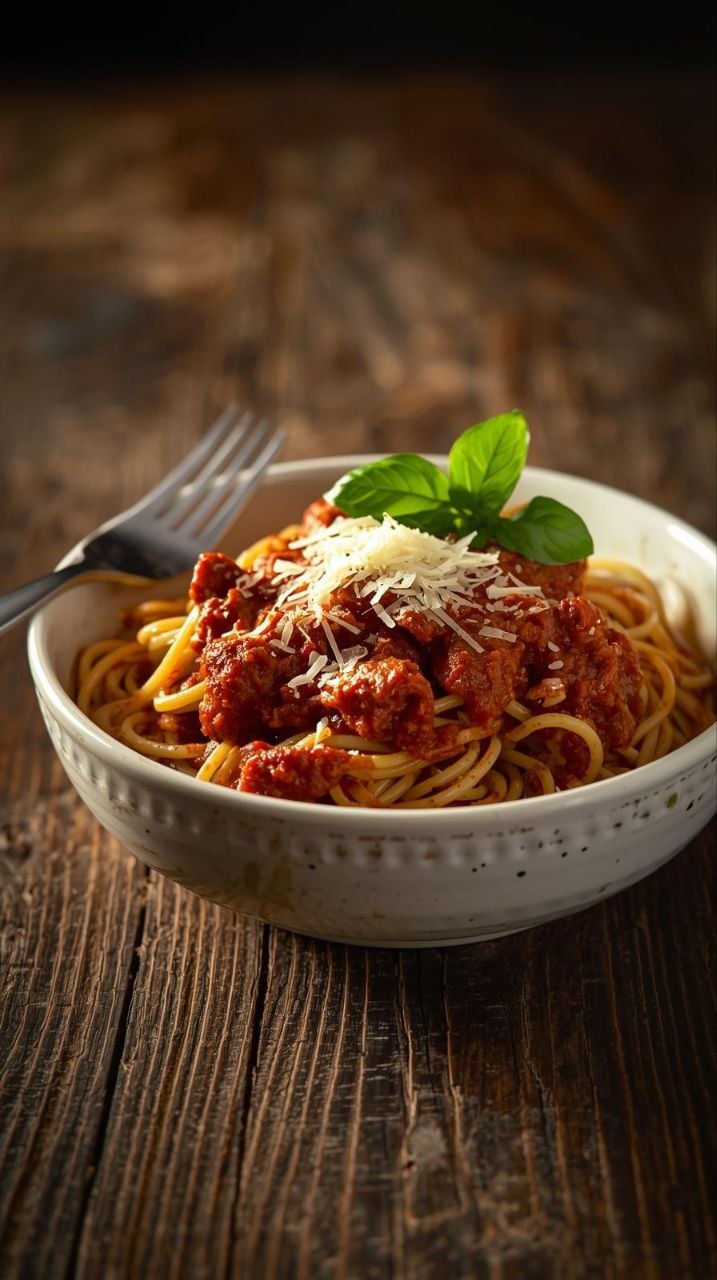
- Spoon over cooked pasta, sprinkle with fresh basil or parsley, and a little grated Parmesan if desired.
- Visual cue: The sauce should cling to the pasta, not sit watery at the bottom.
Troubleshooting & Common Mistakes
- Sauce too thin → Simmer uncovered a bit longer; stir occasionally.
- Sauce too thick → Add 1–2 tablespoons water or broth at a time until desired consistency.
- Meat clumps → Break it up well while browning; don’t stir too often in early minutes.
- Vegetables not soft → Cut smaller; cook longer over medium heat.
- Garlic burns → Add after onions soften, cook briefly, or lower heat.
- Bitter sauce → Ensure tomato paste isn’t burned; add milk or a pinch of sugar to balance acidity.
- Over-spiced → Dilute with more crushed tomatoes or milk.
- Lacking depth → Don’t skip browning meat or deglazing with wine/broth.
Variations & Easy Customizations
- Protein swaps: Ground turkey, chicken, or plant-based crumbles work.
- Vegetables: Add mushrooms, zucchini, or bell peppers for extra bulk.
- Spice: Increase red pepper flakes or add a pinch of smoked paprika.
- Quick version: Skip pork, sauté pre-chopped vegetables, use canned diced tomatoes.
- Seasonal swap: Use fresh cherry tomatoes in summer; roast them first for sweetness.
- Scaling: Double for meal prep; simmer longer for richer flavor.
Storage, Leftovers & Reheating
- Fridge: 3–4 days in an airtight container.
- Freezer: Up to 3 months; cool completely before freezing.
- Texture: Sauce may thicken after refrigeration—add splash of water when reheating.
- Reheating: Warm gently over low heat, stirring occasionally.
- Flavor refresh: Add a small knob of butter or drizzle of olive oil when reheating to restore silkiness.
Frequently Asked Questions
- Can I make this ahead?
Yes! It actually tastes better after sitting overnight as flavors meld. - Can I skip the milk?
You can, but milk softens acidity and makes the sauce less sharp. - Do I need wine?
No, use broth instead; cook slightly longer to concentrate flavor. - What pasta works best?
Spaghetti is classic, but fettuccine, pappardelle, or penne all work. - Can I use canned diced tomatoes instead of crushed?
Yes, but crush them with a spoon while cooking for smoother sauce. - How do I avoid watery sauce?
Simmer gently uncovered; don’t boil aggressively. - Can I make it vegetarian?
Use plant-based crumbles or lentils, and substitute milk with cream or non-dairy milk. - How do I thicken the sauce quickly?
Stir in 1–2 teaspoons tomato paste or simmer a few extra minutes.
Final Thoughts
I keep coming back to this Bolognese because it’s a reliable, comforting meal that feels like it took hours, even on busy nights. The key is patience—softening veggies, browning meat, and letting flavors meld. Even if it doesn’t look perfect, the taste is always rewarding.
This is one of those recipes where minor tweaks won’t ruin it; it’s forgiving and flexible. It’s also a great way to introduce beginners to the joy of slow-simmered sauces without overwhelming steps.
In my kitchen, it’s not about perfection—it’s about creating something hearty and satisfying that the whole family can enjoy.