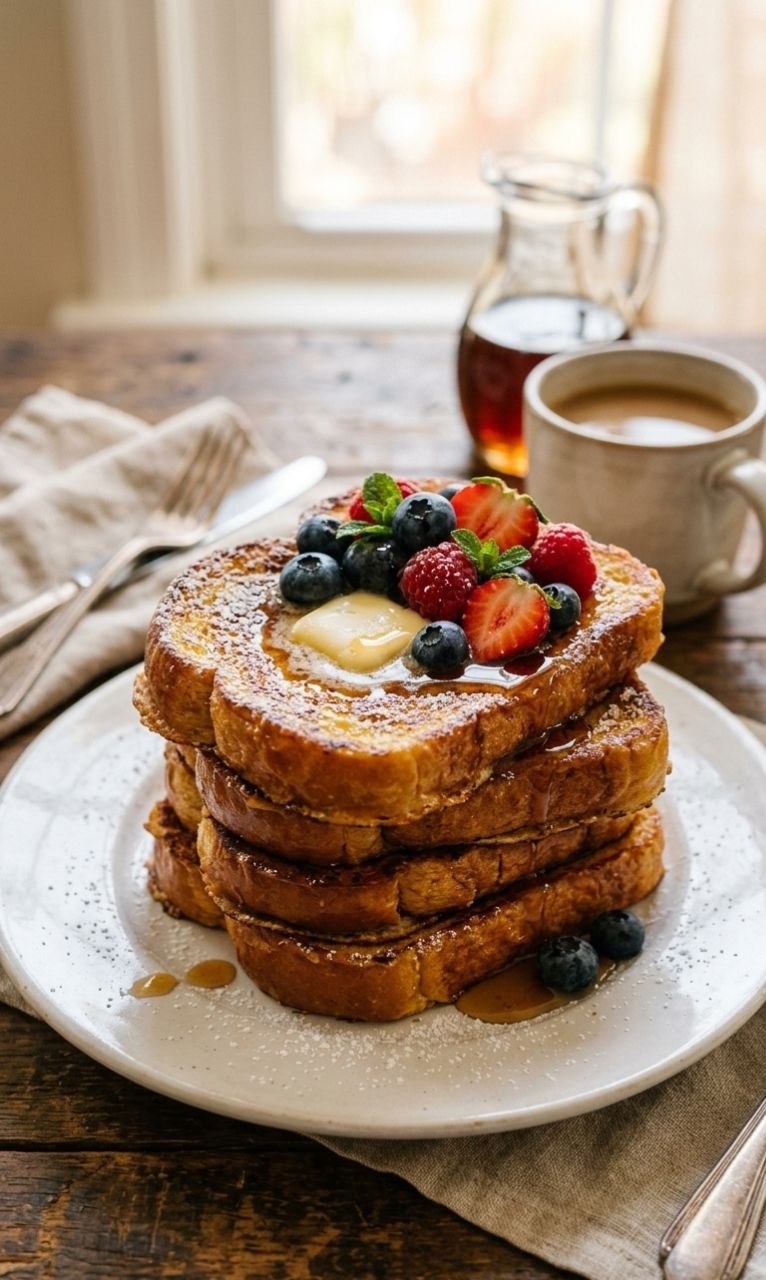
French Toast: 9 Effortless Fixes for Soggy, Bland, Eggy Disasters
FRENCH TOAST
Prep Time: 10 minutes | Cook Time: 15 minutes | Total Time: 25 minutes
Servings: 4 | Difficulty: Easy
Estimated Calories per Serving: 350 kcal
Equipment Needed:
- Medium mixing bowl
- Whisk or fork
- Shallow dish for dipping
- Nonstick skillet or griddle
- Spatula
- Measuring cups and spoons
WHY THIS RECIPE WORKS FOR REAL LIFE
French toast is a classic, adaptable breakfast that works whether you’re feeding a family, prepping for brunch, or using up slightly stale bread. The recipe is flexible in timing: you can assemble ingredients ahead, cook quickly on a busy morning, and clean up in one pan.
It benefits anyone who wants a cozy, satisfying breakfast without complex technique or unusual ingredients. Weeknight breakfast-for-dinner or small household brunches are ideal situations.
INGREDIENTS (WITH CONTEXT)
- 4 large eggs – Main structure for the custard. Important: Do not replace with egg whites only; it will affect texture.
- 1 cup whole milk – Adds richness and creaminess. Flexible: half-and-half can replace for a richer result; plant-based milk works but changes texture slightly.
- 2 tablespoons granulated sugar – Balances the egg flavor and browns slightly in the pan. Flexible: Can reduce to 1 tbsp for less sweetness or use honey/Maple syrup in batter.
- 1 teaspoon pure vanilla extract – Flavor enhancer. Important: Omitting will make flavor flat.
- 1/2 teaspoon ground cinnamon – Adds warmth and depth. Flexible: Can increase to 1 tsp for more spice or skip if sensitive to cinnamon.
- 1/4 teaspoon salt – Balances sweetness and enhances flavor. Important: Do not skip entirely.
- 8 slices sturdy bread – Day-old or slightly stale works best to absorb custard without falling apart. Flexible: White, brioche, challah, or sandwich bread. Avoid thin sandwich bread that tears easily.
- 2 tablespoons butter (for cooking) – Provides browning and flavor. Important: Butter prevents sticking; use oil only if needed.
- Optional toppings: syrup, powdered sugar, fresh fruit, yogurt – Flavor enhancers; fully flexible.
STEP-BY-STEP COOKING METHOD
- Prepare the custard mixture
- Whisk together eggs, milk, sugar, vanilla, cinnamon, and salt in a medium bowl until smooth.
- Time: ~2 minutes
- Visual cue: Mixture should be pale yellow, smooth, no streaks of egg.
- Why: Properly mixed custard ensures even coating and cooking.
- Common mistake: Not whisking enough → streaky eggs in toast. Fix: whisk until uniform.
- Preheat your skillet or griddle
- Medium heat works best; add 1 tsp butter per batch.
- Time: 3–5 minutes
- Cue: Butter melts and foams but does not brown immediately.
- Why: Consistent heat ensures golden crust without burning.
- Shortcut: Use nonstick skillet preheated on medium; no need for high heat.
- Dip the bread
- Place bread slices in shallow dish; dip 10–15 seconds per side, letting it absorb but not saturate.
- Cue: Bread should feel slightly saturated but hold shape.
- Why: Too little custard → dry toast; too much → soggy.
- Mistake: Soaking too long → tears when cooking. Correct: Brief dip.
- Cook the French toast
- Place dipped bread in skillet; cook 2–3 minutes per side.
- Cue: Golden brown edges, slight firmness in center.
- Why: Proper browning develops flavor and texture.
- Mistake: Medium-high heat → burns outside, raw inside. Fix: lower heat slightly.
- Serve immediately
- Plate hot with toppings as desired: syrup, fruit, powdered sugar.
- Shortcut: Keep cooked slices warm on a baking sheet in a 200°F oven while finishing batch.
COMMON PROBLEMS & HOW TO FIX THEM
- Toast soggy: Bread soaked too long → reduce soaking time, ensure bread is slightly stale.
- Toast dry/chewy: Custard too thin → whisk eggs thoroughly; check milk ratio.
- Burned edges, raw center: Heat too high → reduce to medium, cook slower.
- Bread sticks to pan: Insufficient butter or oil → preheat skillet, add butter per batch.
- Flavor flat: Skipped vanilla/cinnamon → add to custard for depth.
- Uneven browning: Skillet not level or crowded → cook in batches, even spacing.
- Toast falls apart: Bread too soft/fresh → use sturdier or day-old bread.
- Custard lumpy: Eggs not whisked → mix thoroughly before dipping.
VARIATIONS & ADJUSTMENTS
- Bread: Brioche or challah for richer taste; whole wheat for hearty flavor.
- Milk: Half-and-half or heavy cream for custard-rich toast; almond/soy milk for dairy-free.
- Flavorings: Orange zest, nutmeg, or almond extract for subtle variation.
- Sweeteners: Maple syrup in batter, brown sugar, or honey.
- Savory option: Skip sugar/cinnamon, add cheese or herbs, cook as pan-fried toast.
- Add-ins: Fold in berries or chocolate chips for mix-ins.
- Scaling: Double ingredients for larger families; cook in batches.
STORAGE, LEFTOVERS & REHEATING
- Keep: 1–2 days in airtight container, refrigerated.
- Texture change: Toast softens over time; crust may lose crispness.
- Reheat: Oven or toaster oven 350°F for 5–8 minutes for crisp exterior.
- Microwave: Works in a pinch but will soften bread; add butter after heating.
FREQUENTLY ASKED QUESTIONS
- Can I make it ahead?
- Mix custard ahead; dip and cook fresh for best texture.
- Can I use gluten-free bread?
- Yes, but use sturdy slices; may need gentler cooking to avoid tearing.
- Why is my French toast rubbery?
- Likely overcooked or bread too fresh; slightly stale bread absorbs better.
- Can I freeze it?
- Yes, cooked toast freezes well; reheat in oven to restore crispness.
- Can I skip cinnamon?
- Yes; flavor will be simpler. Vanilla is more critical for depth.
- Do I need to flip the bread?
- Yes; even browning on both sides ensures flavor and texture.
- Why is it soggy inside?
- Bread over-soaked or pan too hot → reduce soaking, cook slower.
- Best bread for rich French toast?
- Brioche, challah, or thick sandwich bread; absorbs custard without falling apart.
FINAL NOTES
I continue making French toast because it’s reliable, flexible, and comforting. You can adapt it to what’s on hand—stale bread, different milk, spices—without losing the core texture and flavor. The process is simple once you know the cues: custard consistency, golden browning, and gentle flipping. Trust these steps, and the result will be a satisfying, cozy breakfast or quick weeknight dinner that works every time.
If you want, I can also create a version with a step-by-step photo guide and visual cues for each stage, which is very helpful for Pinterest readers and beginners. It would keep the same calm, practical tone. Do you want me to make that next?